The Impact of Technology on Fashion 2026: 3 Innovations
Advertisement
The fashion landscape in 2026 is undergoing a radical transformation driven by technological advancements. Three major innovations are profoundly reshaping how US consumers approach and experience dressing. This shift impacts everything from design to sustainability, setting new industry standards.
The year 2026 marks a pivotal moment for the fashion industry. Technological advancements are not just trends; they are foundational shifts.
These innovations are fundamentally altering how clothing is designed, manufactured, and consumed. The profound Impact of Technology on Fashion 2026: 3 Innovations Reshaping How US Consumers Dress is undeniable.
The Impact of Technology on Fashion 2026: 3 Innovations Reshaping How US Consumers Dress
The fashion industry, long perceived as a realm of fleeting trends and artistic expression, is now irrevocably intertwined with technological progress. We are witnessing a profound transformation across every segment.
From the initial design concept to the final purchase and even post-consumer lifecycle, technology is redefining norms. This comprehensive shift highlights The Impact of Technology on Fashion 2026: 3 Innovations Reshaping How US Consumers Dress in unprecedented ways.
Advertisement
Consumers in the US are experiencing a new era of personalized, sustainable, and interactive fashion. These changes are not merely incremental; they represent a fundamental reimagining of what fashion can be, driven by cutting-edge innovation.
The Rise of Hyper-Personalized Digital Fashion
Digital fashion, once a niche concept for gaming avatars, has exploded into mainstream consciousness. This innovation allows consumers unparalleled customization and virtual try-on experiences.
The boundaries between physical and digital wardrobes are increasingly blurred. This hyper-personalization is a significant aspect of The Impact of Technology on Fashion 2026: 3 Innovations Reshaping How US Consumers Dress.
Advertisement
Consumers can now experiment with styles and designs that might be impractical or costly in the physical world. This opens up new avenues for self-expression and creative exploration within the digital realm.
AI-Driven Style Curators and Virtual Try-Ons
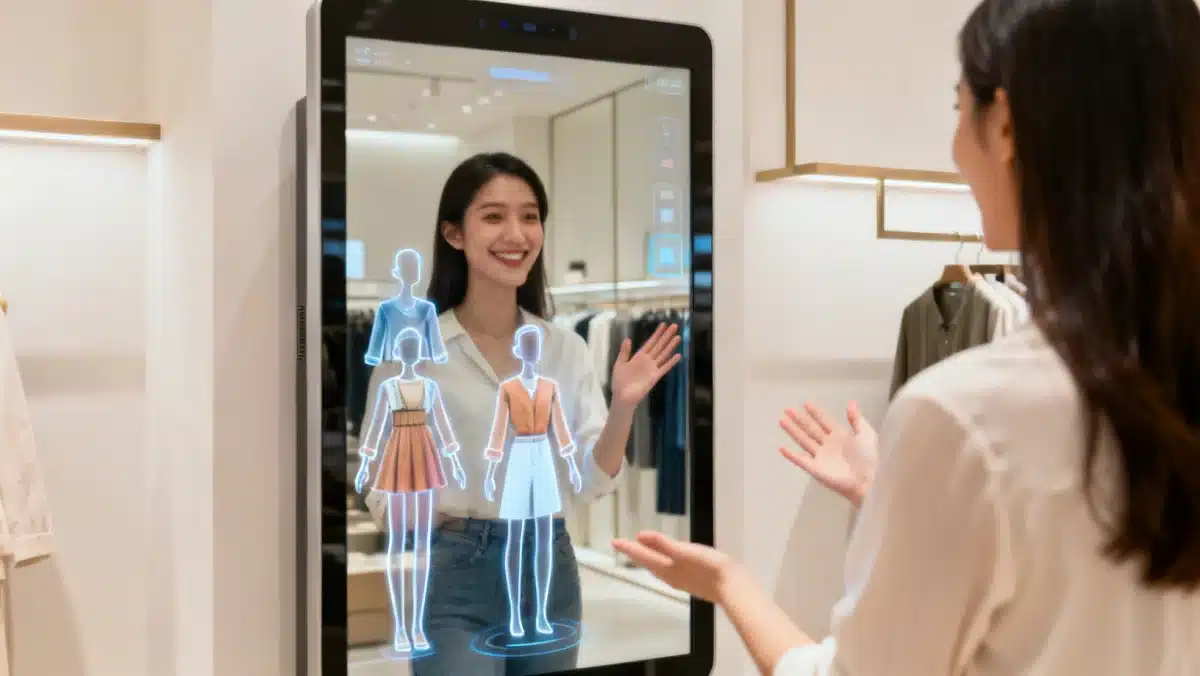
Artificial intelligence has become indispensable in tailoring fashion to individual preferences. AI algorithms analyze personal style, purchase history, and even social media activity.
This data-driven approach provides highly accurate and personalized recommendations. Virtual try-on technologies, utilizing augmented reality (AR), further enhance this experience.
These systems allow users to visualize how garments look on their own bodies without needing to physically try them on. This convenience and accuracy are revolutionizing online shopping.
- Personalized style recommendations based on extensive data analysis.
- Realistic virtual try-on experiences using AR technology.
- Reduction in returns due to better fit and visual accuracy.
- Access to exclusive digital-only collections and designs.
Sustainable Materials and Production Through Biotech
Sustainability has moved from a buzzword to a critical imperative in fashion. Biotechnological advancements are now at the forefront of creating eco-friendly materials and production processes.
This innovative shift addresses long-standing environmental concerns within the industry. It profoundly illustrates The Impact of Technology on Fashion 2026: 3 Innovations Reshaping How US Consumers Dress towards a more conscious future.
New bio-engineered textiles and waste reduction techniques are transforming manufacturing. Consumers are increasingly prioritizing brands that demonstrate genuine commitment to ecological responsibility.
Lab-Grown Fabrics and Circular Economy Models
The development of lab-grown fabrics, such as mycelium-based leather alternatives and spider silk, is gaining significant traction. These materials offer superior performance with minimal environmental impact.
Biotechnology enables the creation of materials that are biodegradable or infinitely recyclable. This supports a true circular economy model within the fashion supply chain.
Brands are investing heavily in research and development to scale these innovative solutions. The consumer demand for ethical and sustainable choices is a powerful driver.
Wearable Technology Integrated into Everyday Apparel
Wearable technology has evolved beyond smartwatches and fitness trackers. It is now seamlessly integrated into clothing, offering functional benefits without compromising style.
This integration marks a significant leap in how fashion serves practical needs. This is another core aspect of The Impact of Technology on Fashion 2026: 3 Innovations Reshaping How US Consumers Dress.
From garments that monitor health to those that adapt to environmental changes, smart clothing is becoming a staple. Consumers are embracing the convenience and utility these innovations provide.
Smart Textiles for Health Monitoring and Performance
Advanced textiles are now capable of monitoring vital signs, tracking activity, and even regulating body temperature. These smart garments provide real-time data directly to the wearer.
Athletes, health-conscious individuals, and those requiring specific medical monitoring benefit greatly. The discreet integration means fashion remains fashionable while delivering powerful insights.
The potential for preventative healthcare through smart apparel is immense. This convergence of fashion and wellness is redefining personal care.
The Evolving Retail Experience in a Tech-Driven World
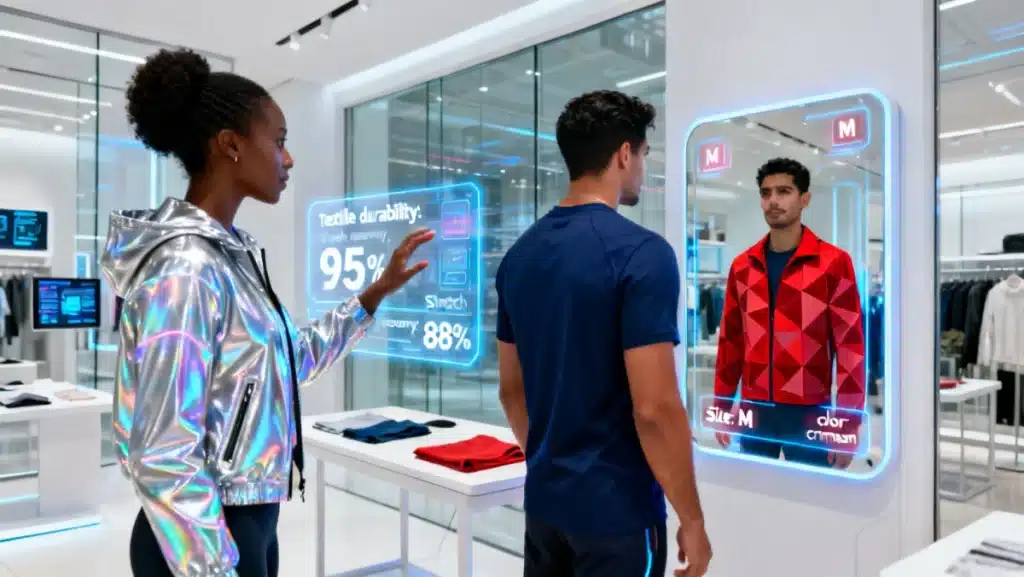
Retail environments are transforming to meet the demands of tech-savvy consumers. Physical stores are becoming experiential hubs, blending digital and physical interactions seamlessly.
Interactive displays, smart mirrors, and personalized shopping assistants are commonplace. This enhanced experience is a direct result of The Impact of Technology on Fashion 2026: 3 Innovations Reshaping How US Consumers Dress.
Online retail is also evolving, with advanced AI and AR tools providing immersive shopping journeys. The future of retail is omnichannel, offering consistency across all touchpoints.
Immersive Shopping and Supply Chain Transparency
Immersive shopping experiences, utilizing virtual reality (VR) and augmented reality (AR), are redefining how consumers browse and purchase. Brands are creating virtual showrooms and interactive product demonstrations.
Beyond the front end, blockchain technology is enhancing supply chain transparency. Consumers can now trace the origin and journey of their garments, ensuring ethical sourcing and production.
This level of transparency builds trust and empowers informed purchasing decisions. The entire lifecycle of a garment is becoming more visible to the end-user.
Ethical Considerations and Data Privacy in Smart Fashion
As technology permeates fashion, ethical considerations and data privacy become paramount. The collection of personal data by smart garments raises important questions.
Consumers are increasingly concerned about how their biometric and behavioral data is used. Brands must prioritize transparent data policies and robust security measures.
Regulatory frameworks are also adapting to address these new challenges. Ensuring consumer trust is crucial for the widespread adoption of smart fashion technologies.
Balancing Innovation with Responsibility
The industry faces the challenge of balancing rapid innovation with responsible data stewardship. Clear consent mechanisms and anonymization techniques are essential.
Educating consumers about the benefits and risks of smart apparel is also vital. Brands that demonstrate a strong commitment to privacy will gain a competitive advantage.
The long-term success of smart fashion hinges on building and maintaining consumer confidence. This requires a proactive and ethical approach from all stakeholders.
Future Outlook: Beyond 2026
Looking beyond 2026, the trajectory of technology in fashion points towards even deeper integration. The innovations we see today are merely precursors to what is yet to come.
Anticipate further advancements in material science, AI-driven design, and hyper-connected garments. The ongoing Impact of Technology on Fashion 2026: 3 Innovations Reshaping How US Consumers Dress will continue to accelerate.
The convergence of fashion, technology, and lifestyle will become even more seamless. This promises a future where clothing is not just an aesthetic choice but an intelligent extension of ourselves.
What this means
The current landscape demonstrates that The Impact of Technology on Fashion 2026: 3 Innovations Reshaping How US Consumers Dress is profound and irreversible. These innovations signify a permanent shift towards more personalized, sustainable, and intelligent clothing options. Consumers can expect continued evolution in how they interact with fashion, demanding greater transparency and functionality. The industry’s rapid adaptation signals a future where technology is not just an accessory but an integral part of sartorial expression and daily life. This ongoing transformation will redefine consumer expectations and brand strategies for years to come.